Present Tense “VIR” Verbs Portuguese: The Secret Rule?
Table of Contents
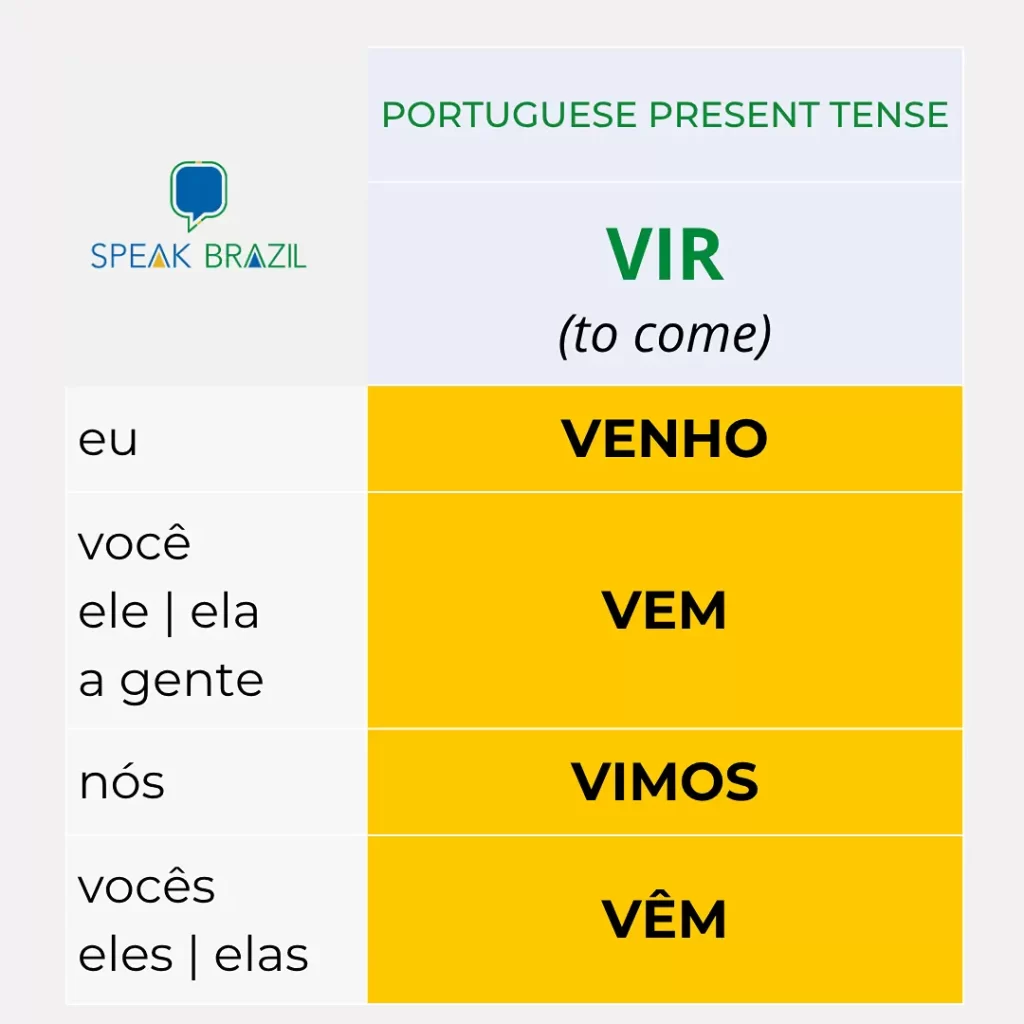
Oi! 👋 Hoje nós vamos aprender um dos verbos irregulares mais pesquisados por quem estuda português brasileiro: o verbo “vir”(to come)no presente do indicativo.
(Hi! Today we’re going to learn one of the most searched irregular verbs in Portuguese learners: the verb “vir” (to come) in the present indicative! – Present Tense “VIR” verbs Portuguese.)
Esse “verbinho” pequeno causa muita confusãoporque ele muda bastante quando conjugado — e ainda por cima é frequentemente confundido com o verbo “ver”(to see). Mas fica tranquilo(a): até o final deste artigo, você vai saber conjugar “vir” com confiança! 💪
(This little verb causes a lot of confusion because it changes a lot when conjugated — and it’s often mixed up with the verb “ver” (to see). But don’t worry: by the end of this article, you’ll be able to conjugate “vir” with confidence!)
Why is "vir" irregular in Portuguese?
O verbo viré um dos verbos irregulares no presente do indicativo em português mais comuns no dia a dia dos brasileiros.
Ele não segue o padrãodos verbos regulares terminados em“-ir” (como “abrir” ou “partir”), então ele precisa ser memorizado à parte.
(It doesn’t follow the pattern of regular verbs in “-ir” (like “abrir” or “partir”), so it needs to be memorized separately.)
Você vai encontrar esse verbo em conversas, mensagens, músicas e até em convites— por isso, dominar aconjugação do verbo vir em portuguêsé essencial para qualquer estudante que queira alcançar o nível B1 ou B2. 🎯 (You’ll find this verb in conversations, messages, songs, and even invitations — that’s why mastering the “vir” verb conjugation in Portuguese is essential for any learner aiming for B1 or B2 level.)
💡 Dica da professora:(Teacher’s tip:)repare que “vimos“ (nós) no presente é igual ao pretérito perfeito de “ver”! Só o contexto da frase vai te ajudar a diferenciar.
(Notice that “vimos” (we) in the present tense looks identical to the Past Tense in Portuguese of “ver”! Only the sentence context will help you tell them apart.)Por exemplo: “Nós vimos todo dia às 8h” (vir = present) vs. “Nós vimosum filme ontem” (ver= past).
Verbs derived from "vir" - irregular verbs
Vários verbos em português são formados a partir de “vir” e seguem o mesmo padrão de irregularidade. Esses são ótimos para expandir seu vocabulário depois de dominar o verbo principal.
(Several Portuguese verbs are built from “vir” and follow the same irregular pattern. These are great for expanding your vocabulary once you’ve mastered the main verb.)
Convir
(to suit / to agree / to be convenient)
Exemple: "Este horário convém para você?"
(Does this time suit you?)
Intervir
(to intervene)
Exemple: Ela sempre intervém para ajudar quem precisa."
(She always intervenes to help those in need.)
Provir
(to stem from / to originate)
Exemple: As informações provêm de fontes confiáveis.
(The information comes from reliable sources.)
Esses verbos derivados do verbo “vir” são verbos da língua portuguesa que usamos em contextos formais. (These verbs, which are derived from the verb “vir,” are Portuguese language verbs that we use in formal contexts.)
Come, go, see - irregular verbs in Portuguese
Três verbos que frequentemente confundemestudantes de português:(Three verbs that often confuse Portuguese learners:)
Vir(to come) → movimento emdireçãoa quem fala.(Movement toward the speaker.) → “Você vemaqui em casa?”
Ir(to go) → movimento para longe de quem fala.(Movement away from the speaker.) → “Eu vouao mercado.”
Ver(to see) → percepção visual, não movimento.(Visual perception, not movement.) → “Eu vejoo mar daqui.”
Essa diferença entre “vir” e “ir” em português é uma das dúvidas mais comuns entre estudantes estrangeiros — e entender bem esse contraste faz toda a diferença na hora de falar naturalmente.
(This difference between “vir” and “ir” in Portuguese is one of the most common doubts among foreign learners — and understanding this contrast well makes all the difference when speaking naturally.)
Everyday sentences with "vir"
Você vemà minha festa de aniversário?(Are you coming to my birthday party?)
Meus pais vêm nos visitar em dezembro.(My parents are coming to visit us in December.)
De onde você vem?(Where do you come from?)
Nós vimosdireto do trabalho para cá.(We’re coming straight from work to here.)
Esse suco vemcom ou sem açúcar?(Does this juice come with or without sugar?)
Let's Practise Portuguese verbs!
Complete the sentences by conjugating “vir” in the present tense.
a. Complete as frases conjugando o verbo “vir” no presente do indicativo:
Eu ______ (vir) de trem todos os dias.
Vocês ______ (vir) para o show da Anitta amanhã?
Minha irmã ______ (vir) morar no Brasil este ano.
Nós ______ (vir) sempre de bicicleta.
De onde ______ (vir)esse queijo delicioso?
Eles ______ (vir) direto do aeroporto.
Você ______ (vir) comigo à praia de Copacabana?
Ele ______ (vir) atrasado hoje.
Vir, ir, or ver? Choose the correct verb.
b. Vir, ir ou ver? Escolha o verbo correto:
Eu sempre ______ o pôr do sol da minha varanda.
Você ______ à minha casa amanhã?
Nós ______ ao cinema todo fim de semana.
Eles ______ (aqui) porque querem conhecer meus pais.
Eu não ______ nada sem meus óculos.
Speaking challenge in Brazilian Portuguese
Responda em voz alta (Answer the questions aloud.)
De onde você vem?(Where are you from?)
Com quem você vempara as aulas de português?(Who do you cometo Portuguese class with?)
O que você vêno caminho?(What do you seealong the way?)
Confira as respostasno final desse artigo!(Check the answersat the end of this article!)
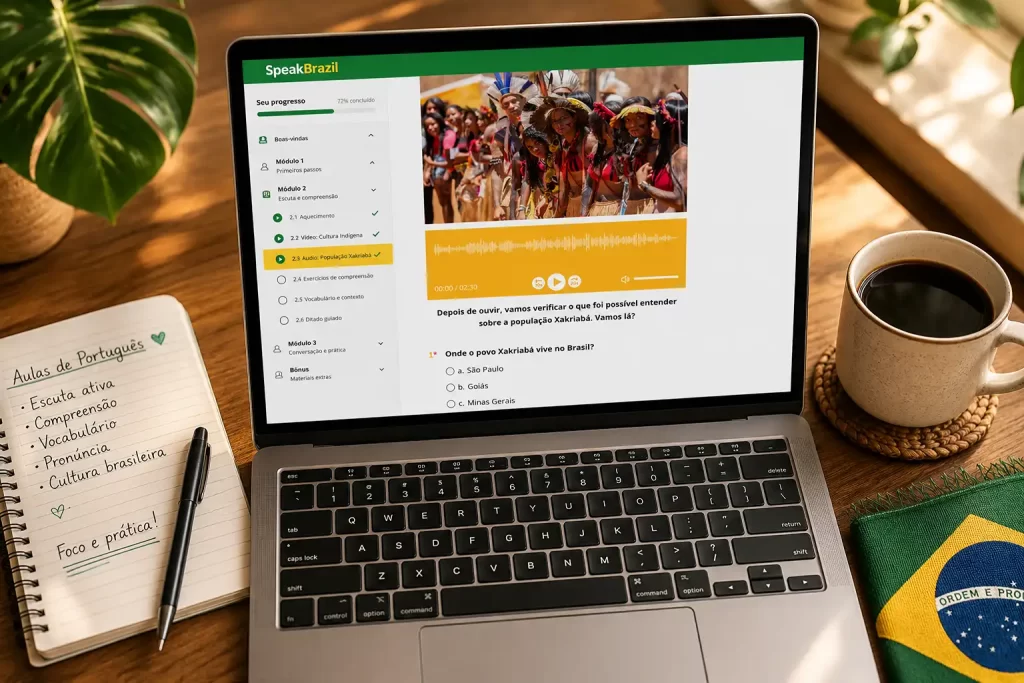
Practice your Brazilian Portuguese with audio and focus
Learn Brazilian Portuguese with short stories, news, music, and much more!
Want to practice irregular verbs in Portuguese some more?
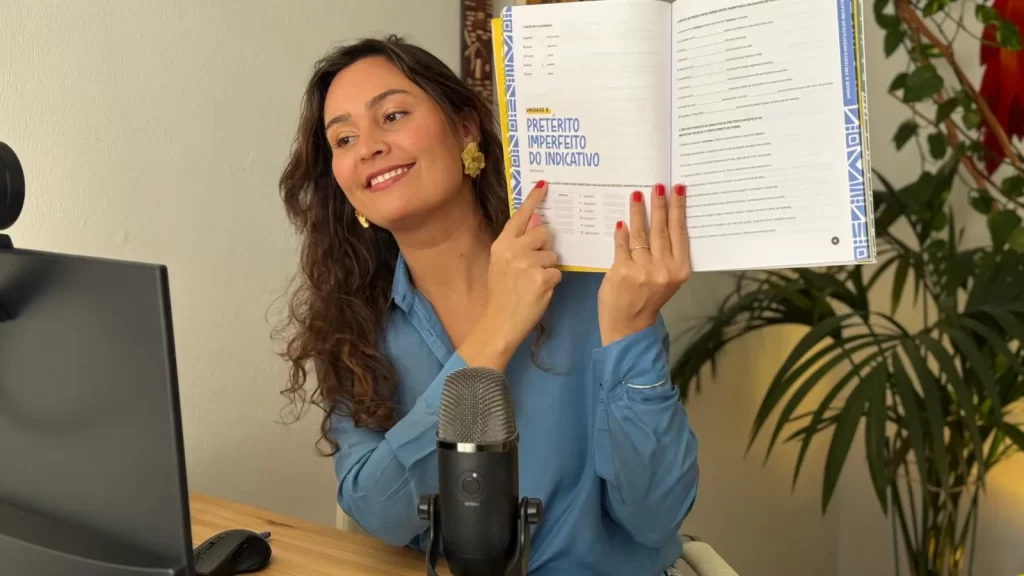
Se você quer praticar não só o verbo “vir”, mas todos os principais verbos irregulares e regulares em português, temos os livros de exercíciosVamos Praticar Volumes 1 e 2, feitos para você memorizar e falar português naturalmente.
(If you want to practise not just “vir” but all the main irregular and regular Portuguese verbs, check out our exercise books Vamos Praticar Volumes 1 and 2, made to help you memorise and speak Portuguese naturally.)
I’m so happy to be part of your journey! If this content helped you learn and practice, you can make a small donation by clicking the button below! Thank you! 💛
Bárbara Sousa
Director of Studies - Brazilian Portuguese teacher Bárbara is a trained linguist and teacher with a true vocation for educating.