THE BLOG

14 ways to say thank you in Brazilian Portuguese beyond obrigado

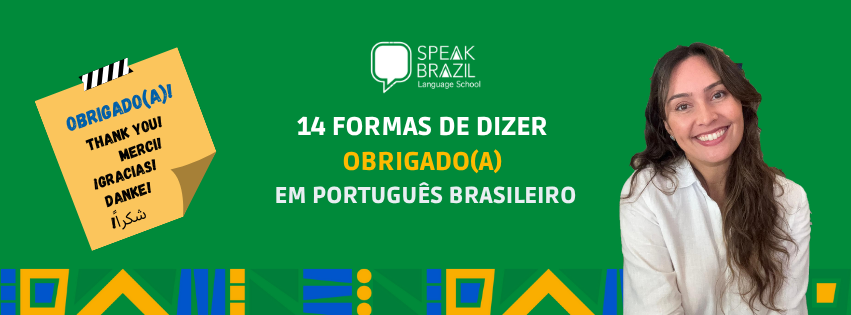
How do you say thank you in brazilian portuguese? In this lesson, we will learn the various ways to say thank you in Brazilian Portuguese.
Table of Contents

14 ways to say "thank you" in Portuguese

đŸ˜ŽâžĄïž Na nossa aula de hoje, vamos aprender outras maneiras divertidas e importantes de dizer “obrigado(a)” como um falante nativo brasileiro. Vamos mergulhar nas expressĂ”es educadas na lĂ­ngua portuguesa!

(In today’s lesson, we’re going to learn other fun and important ways to say ‘thank you’ in Brazilian Portuguese and speak like a native speakers. Let’s immerse ourselves in polite expressions in the Portuguese language!)

Neutro e padrĂŁo (Neutral and standard)

1. Obrigado(a) (Thank you)

2. Muito obrigado(a) (Thank you very much)

3. MuitĂ­ssimo obrigado(a) (Thank you so much)

4. Obrigado(a) por tudo (Thank you for everything)

Jeito Formal (the formal way of saying thank you in Portuguese)

5. Agradeço (I thank you)

6. Agradeço de coração (I thank you from the bottom of my heart)

7. Eu que agradeço (I am the one who thanks you)

8. Fico muito grato(a) (I am very grateful)

Jeito Informal (the informal way of saying thank you in Portuguese)

9. Brigado(a) (Thanks)

10. BrigadĂŁo (Thanks a lot)

11. Nem sei como agradecer (I don’t even know how to thank you)

12. Valeu (Thanks)

ExpressÔes cristalizadas para dizer obrigado(a) (Set expressions for say thank you)

13. Deus te pague (God bless you)

14. Fico te devendo essa (I owe you one)

The trick to using ser vs estar First, remember that ser is generally used for permanent situations (to talk about nationality, origin, profession, time, dates
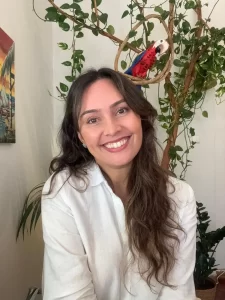
). Meanwhile, estar is usually used for temporary situations (location, non-permanent states). Teacher Barbara, who teaches Brazilian Portuguese as a foreign language, smiling. She is in the place where she gives her online Portuguese classes to her students. In this place there is a tree with three very beautiful plants, a macaw, and paintings representing Brazil.
(PTBR) Oi, muito obrigada por vocĂȘ estar aqui! Estou muito feliz! / (EN) Hi, thank you so much for being here! I'm very happy!

In addition to the various ways to say “thank you very much” in Portuguese like a native speaker, the word “obrigado” can mean very different things depending on the tone of voice. That’s one of the hardest parts of spoken Portuguese — and one of the most important if you want to really understand a Brazilian in everyday life, without asking them to repeat themselves three times 😅. If you want to train your ear to pick up on these nuances automatically, check out Afine o Ouvido — a course designed exactly for that.

Obrigado vs Obrigada (Thank you)

Observação! (Note!)

Em portuguĂȘs, vamos fazer concordĂąncia de gĂȘnero com as palavras “obrigado x obrigada” do ponto de vista da pessoa que fala “obrigado(a)”. (In Portuguese, we use gender agreement with the words ‘obrigado’ and “obrigada” from the point of view of the person saying ‘obrigado(a)’.)

Em outras palavras: (In other words:)

  • Obrigado: A pessoa que agradece: homem, menino, ou pessoa que se identifica com o gĂȘnero masculino, diz “obrigado” (ou muito obrigado, muitĂ­ssimo obrigado, grato etc.). (Thank you: The person giving thanks: a man, boy, or person who identifies with the male gender, says ‘thank you’: (or thank you very much, thank you so much, grateful, etc.)

  • Obrigada: A pessoa que agradece: mulher, menina, ou pessoa que se identifica com o gĂȘnero feminino, diz “obrigada” (ou muito obrigada, muitĂ­ssimo obrigada, grata etc.). (Thank you: The person giving thanks: woman, girl, or person who identifies with the female gender, says ‘thank you’ (or thank you very much, thank you so much, grateful, etc.)

Vamos ver alguns exemplos prĂĄticos dos muitos jeitos de dizer “obrigado(a)” em portuguĂȘs: (Let’s look at some practical examples of the many ways to say ‘thank you’ in Portuguese:)

Practical Examples of Express Gratitude

1. Situação (Situation)                          

→ Reunião de trabalho (e-mail) (Formal business meeting (email))

Agradecimento Sugerido  (Suggested thanks) 

→ Agradeço a sua colaboração. / Fico muito grato(a) pela sua atenção. (Thank you for your cooperation. / I’m very grateful for your attention.) 

NĂ­vel de formalidade (Level of formality)

→ Formal, profissional, elegante. (Formal, professional, elegant.)

2. Situação (Situation)                          

→ Receber um presente (Receive a gift)

Agradecimento Sugerido  (Suggested thanks) 

→ Muito obrigado(a)! (Thank you very much!)

NĂ­vel de formalidade (Level of formality)

→ PronĂșncia oral e informal do portuguĂȘs brasileiro. (Oral and informal pronunciation of Brazilian Portuguese.)

3. Situação (Situation)                          

→ O recepcionista de um hotel (The hotel receptionist)

Agradecimento Sugerido  (Suggested thanks) 

→ Muitíssimo obrigado(a)! / Nem sei como agradecer! / Fico te devendo essa! (Thank you!) 

NĂ­vel de formalidade (Level of formality)

→ Neutro, rápido, educado. (Neutral, quick, polite.)

4. Situação (Situation)                          

→ Intensificar a forma de agradecer. (Intensify the way you express gratitude.)

Agradecimento Sugerido  (Suggested thanks) 

→ MuitĂ­ssimo obrigado(a)! / Nem sei como agradecer! / Fico te devendo essa! (Thank you so much! / I don’t even know how to thank you! / I owe you one!) 

NĂ­vel de formalidade (Level of formality)

→ Muita gratidĂŁo, informalidade – gĂ­rias e expressĂ”es com emoção. (Much gratitude, informality – slang and expressions with emotion.)

5. Situação (Situation)                          

→ PronĂșncia oral, muito comum eliminar a vogal “o” no inĂ­cio da palavra (Oral pronunciation, very common to omit the vowel ‘o’ at the beginning of the word)

Agradecimento Sugerido  (Suggested thanks) 

→ Brigado(a)! (Thank you or Thanks!)

NĂ­vel de formalidade (Level of formality)

→ Padrão, cordial, demonstra satisfação. (Standard, cordial, shows satisfaction.)

6. Situação (Situation)                          

→ Uma pessoa idosa pode dizer mais facilmente a expressão cristalizada de raíz religiosa. (An elderly person can more easily say the crystallised expression of religious origin.)

Agradecimento Sugerido  (Suggested thanks) 

→ Obrigado(a), Deus te pague. (Thank you, God bless you.)

NĂ­vel de formalidade (Level of formality)

→ Demonstra gratidĂŁo e respeito, adicionando uma bĂȘnção cristĂŁ comum. (Show gratitude and respect by adding a common Christian blessing.)

Non-verbal language to say ‘thank you’ in Brazil

Linguagem Não-Verbal para dizer “obrigado ou obrigada” no Brasil

A forma como nĂłs brasileiros dizemos “obrigado(a)” Ă© tĂŁo importante quanto a prĂłpria palavra. (The way we Brazilians say ‘thank you’ is as important as the word itself.)

A Entonação (o tom de voz) e os Gestos (a linguagem corporal) adicionam camadas de significado que podem mudar completamente a mensagem. (Intonation (tone of voice) and gestures (body language) add layers of meaning that can completely change the message.)

1. Intonation in Portuguese: Intensification, Softening, Reduction

Entonação em portuguĂȘs: Intensificação, Suavização, Redução

O tom de voz, o prolongamento de algumas vogais, a entonação alta/aguda refletem o nível de gratidão (the tone of voice, the prolongation of some vowels, and high/sharp intonation reflect the level of gratitude.)

Vamos ver alguns exemplos: (Let’s look at some examples)

1. Entonação/expressĂŁo – Exemplo 1:  (Intonation/expression)                        

→ Obrigado/a! (Thank you!)

→ Neutro, firme, com a Ășltima sĂ­laba levemente prolongada. (Neutral, firm, with the last syllable slightly prolonged.) 

→ Educado e cordial. (Polite and friendly.)

2. Entonação/expressĂŁo – Exemplo 2: (Intonation/expression)                          

→ Muiiiiito obrigado/a! (Thank you very much!)

→ Entonação alta/aguda, alongando a vogal nasal [Ä©] da palavra “muito”. (High/sharp intonation, lengthening the nasal vowel [Ä©] in the word ‘muito’ (very).)

→ Demonstra que foi um grande favor ou que foi muito apreciado, por exemplo. (It shows that it was a great favour or that it was greatly appreciated, for example.)

2. Gestures and Body Language in Brazilian Portuguese

Gestos e Linguagem Corporal no portuguĂȘs brasileiro

NĂłs falantes de portuguĂȘs brasileiro frequentemente usamos gestos/toques para reforçar ou suavizar o agradecimento: (We Brazilian Portuguese speakers often use gestures/touches to reinforce or soften our thanks:)

Por exemplo: (For exemple:)

Reinforcing Gratitude (who says ‘Thank you’):

Reforçando o Agradecimento (quem diz “Obrigado/a”):

Toque no braço:  Ă© comum um brasileiro ao falar, tocar nas pessoas que ele tenha intimidade ou que nunca tenha visto antes. E essa situação tambĂ©m acontece muitas vezes quando um(a) brasileiro(a) diz “obrigado(a)” ou pede desculpas. (Touching the arm:  It is common for Brazilians to touch people they are close to or have never met before when speaking. This also often happens when a Brazilian says ‘thank you’ or apologises.)

Perfeito!!! (Perfect!!!)
Notice how many different ways there are to just say “thank you” in Portuguese? And that’s just the tip of the iceberg! Verbs like “to thank” [agradecer], gender agreement, verb tenses… it’s all part of the living, everyday grammar Brazilians actually use.

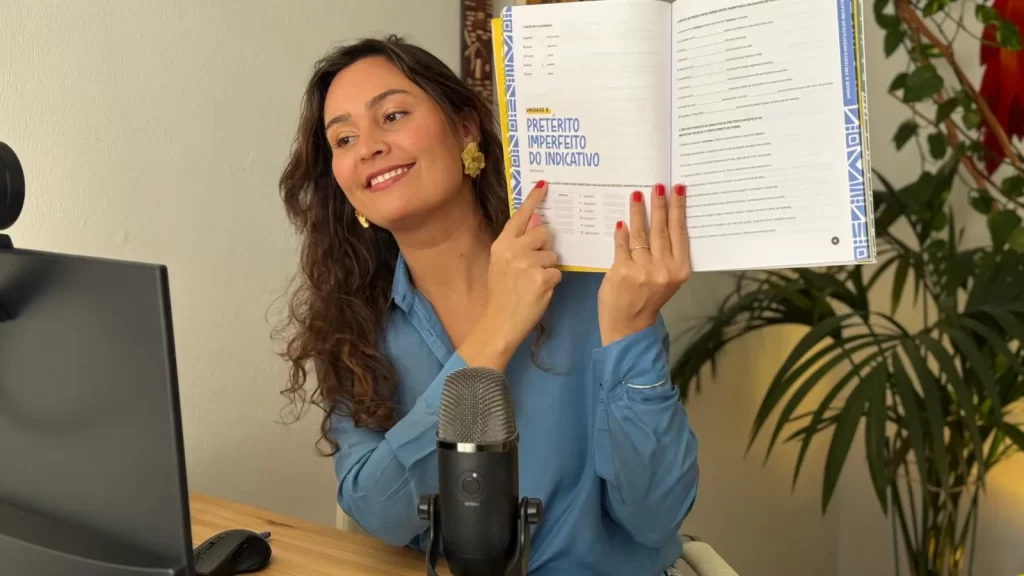
We have a Portuguese workbook filled with grammar, vocabulary, and verb conjugation exercises — perfect for anyone who wants to go beyond “obrigado” and truly master everyday spoken Portuguese!

Click the button below to learn more! đŸ‘‡đŸŸ

👀Se vocĂȘ quiser continuar aprendendo mais sobre os verbos em portuguĂȘs! (Want to keep learning about Portuguese grammar and verb conjugations!) 😊

Confira esses outros artigos do blog relacionados aos verbos em portuguĂȘs: (Check out these related posts on Portuguese verb conjugation and grammar!)

FAQ

How do you say thank you in Portuguese?

In Brazilian Portuguese, ‘thank you’ can be translated as ‘obrigado(a)’. There are other ways to say thank you in Brazilian Portuguese, such as: “valeu” (Thanks) (informal) and “Fico muito grato” (I am very grateful) (formal).

In Portuguese, we use gender agreement with the words ‘obrigado’ and “obrigada” from the point of view of the person saying ‘obrigado(a)’.

In other words: Obrigado/Thank you: The person giving thanks: a man, boy, or person who identifies with the male gender, says ‘thank you’: (or thank you very much, thank you so much, grateful, etc.)

Obrigada/Thank you: The person giving thanks: woman, girl, or person who identifies with the female gender, says ‘thank you’ (or thank you very much, thank you so much, grateful, etc.)

Picture of BĂĄrbara Sousa
BĂĄrbara Sousa

Director of Studies - Brazilian Portuguese teacher
BĂĄrbara is a trained linguist and teacher with a true vocation for educating.

☕ Buy me a cafĂ©!

Every coffee helps keep the free content flowing. Muito obrigado!

Share:
Get the latest Posts

Subscribe to this list and get notified fornew publications posted on our blog!

Latest Posts

Categories